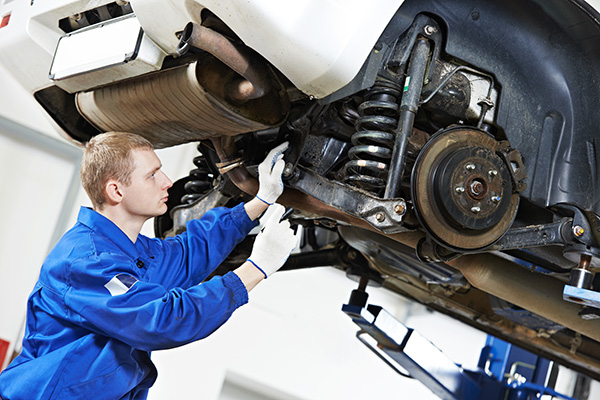
When wheel alignment is off, the car might still feel “good enough” to drive, which is why a lot of drivers put it off. Maybe it pulls a little, or the steering wheel is slightly crooked, but the car still goes where you point it. What you do not see is how hard that misalignment is working your tires and suspension on every mile.
Over time, poor alignment quietly wears out expensive parts long before their time.
What Wheel Alignment Actually Controls
Wheel alignment is about angles and direction, not just keeping the steering wheel straight. The main settings are camber, caster, and toe, and each one affects how the tire meets the road. When these angles are correct, the tread contacts the pavement evenly, the car tracks straight, and the steering wheel returns smoothly after a turn.
If those angles shift, even by a small amount, the tire can tilt, drag, or scrub as it rolls. That extra friction shows up as uneven wear, extra heat in the rubber, and more stress on suspension joints. From the driver’s seat, you might only notice a slight drift or a vague steering feel, but the tread is telling a different story.
Common Signs Your Alignment Is Off
You do not need a machine at home to suspect alignment trouble. Some easy-to-spot clues include:
- A steering wheel that sits off-center while you drive straight
- The car drifting or pulling to one side on a flat road
- Uneven tread depth across a tire, especially on the inside or outside edge
- A light but persistent shimmy or “nervous” feel at highway speeds
- Tires that get noisy or start to hum long before the tread is worn out
Any one of these can justify an alignment check. When we see two or three together, our technicians know the tires and suspension have been working harder than they should for a while.
How Poor Alignment Damages Your Tires
Tires are designed to roll straight with the tread flat on the road. Misalignment changes that. Too much toe in or toe out makes the tire scrub sideways slightly with every rotation. Over thousands of rotations, that scrub wipes away rubber on one edge much faster than the rest of the tread.
Camber problems tilt the tire so one shoulder carries most of the load. That can create a thin, sharp edge on the inside or outside while the rest of the tire still looks usable. Once wear patterns like this are set in, rotating the tires will not fix the problem, it only spreads the damage around. By the time many drivers notice a cord showing or a strange wear pattern, the only real fix is a new tire plus an alignment.
The Hidden Impact on Suspension and Steering Parts
Poor alignment does more than chew up tires. It also loads suspension and steering parts at angles they were not designed to handle. A control arm bushing that is constantly twisted instead of sitting near its neutral position will wear out faster. Ball joints, tie rod ends, and strut mounts see extra stress every time the suspension moves.
That extra stress shows up as clunks over bumps, looseness in the steering wheel, and wandering on the highway. In severe cases, worn parts can allow the alignment angles to shift as you drive, making the car feel unstable and accelerating tire wear further. When we inspect a vehicle with repeated alignment problems, we often find loose components that need attention before the angles will stay where they belong.
Driving Habits That Knock Alignment Out of Spec
Some roads and habits are harder on alignment than others. Even a freshly aligned car can go out of spec more quickly if it sees a lot of abuse. Common culprits include:
- Hitting potholes, speed bumps, or driveway lips faster than necessary
- Clipping curbs while parking or taking tight turns
- Carrying heavy loads or towing without considering how it affects suspension geometry
- Driving regularly on rough, rutted, or unpaved roads
- Ignoring small pulls or vibrations that start after a hard impact
Each hit might only move things a little, but over time those small shifts add up. When we talk with drivers about alignment, we often find a specific curb strike or pothole that lines up with when the car started to feel different.
Why Regular Alignment Checks Save Money Over Time
Replacing a set of tires, a pair of struts, or several steering components costs much more than a periodic alignment. When alignment is checked when you install new tires, after major suspension work, or after a significant impact, you give those parts a fair chance to wear evenly.
Regular checks also help catch worn components before they create strange wear patterns. If the alignment readings will not stay within spec, that is a clue that something is moving that should not be. Fixing that early keeps the car safer, quieter, and easier to drive, and it stretches the life of both tires and suspension parts.
Get Wheel Alignment Service in West Palm Beach, FL with Military Brake & Alignment Services Inc.
We can inspect your tires, alignment, and suspension to see how far things have drifted and what is causing it. We explain the readings in plain language, point out any worn parts, and set up an alignment that helps your car track straight while protecting your tires.
Call Military Brake & Alignment Services Inc. in West Palm Beach, FL to schedule an alignment check and stop poor alignment from quietly wearing out your tires and suspension.